
When acute low back pain strikes, one of the first questions patients often ask is:
“What can you actually do to help me?”
When your back is painful enough that getting out of a chair, turning in bed, or standing upright is difficult, it can be tempting to either stop moving completely or try to stretch, exercise, or treat the area aggressively.
But doing too much too soon is not always the best approach.
Early care should be matched to what your body can comfortably tolerate, with treatment and activity gradually progressed as symptoms improve.
First, We Need to Understand What Is Going On
Low back pain can come from a variety of structures and mechanisms. Sometimes there is a clear event, such as lifting something heavy, twisting, or making an awkward movement. In other cases, symptoms develop without one obvious injury.
An examination helps determine what may be contributing to your symptoms, what movements are currently limited, and what types of treatment are appropriate. More importantly it helps us determine if our care is helpful or if we need to refer a patient out to another office (orthopedist, neurologist, physical therapy etc.) Our office has an established referral system with Connecticut Orthopedics who we feel comfortable with our patients care.
The goal isn’t simply to put a label on your back pain. It is to develop a reasonable clinical explanation for your symptoms and determine how we can safely help you move forward.
Treatment Should Match Your Current Tolerance
When your back is highly irritated, more treatment is not necessarily better treatment.
For some people, stretching or exercising through an acute flare-up may be appropriate. For others, certain movements may temporarily aggravate their symptoms.
The same is true of hands-on treatment. There are many different ways to treat the spine and surrounding tissues, and the appropriate approach depends on the patient’s presentation.
Depending on the examination, treatment may include spinal manipulation or mobilization, soft-tissue techniques, gentle mobility work, therapeutic exercise, or other conservative approaches.
The goal is to find an appropriate starting point and then progressively increase what your body can tolerate.
What Is Flexion-Distraction?
One technique we may use for certain patients is called flexion-distraction.
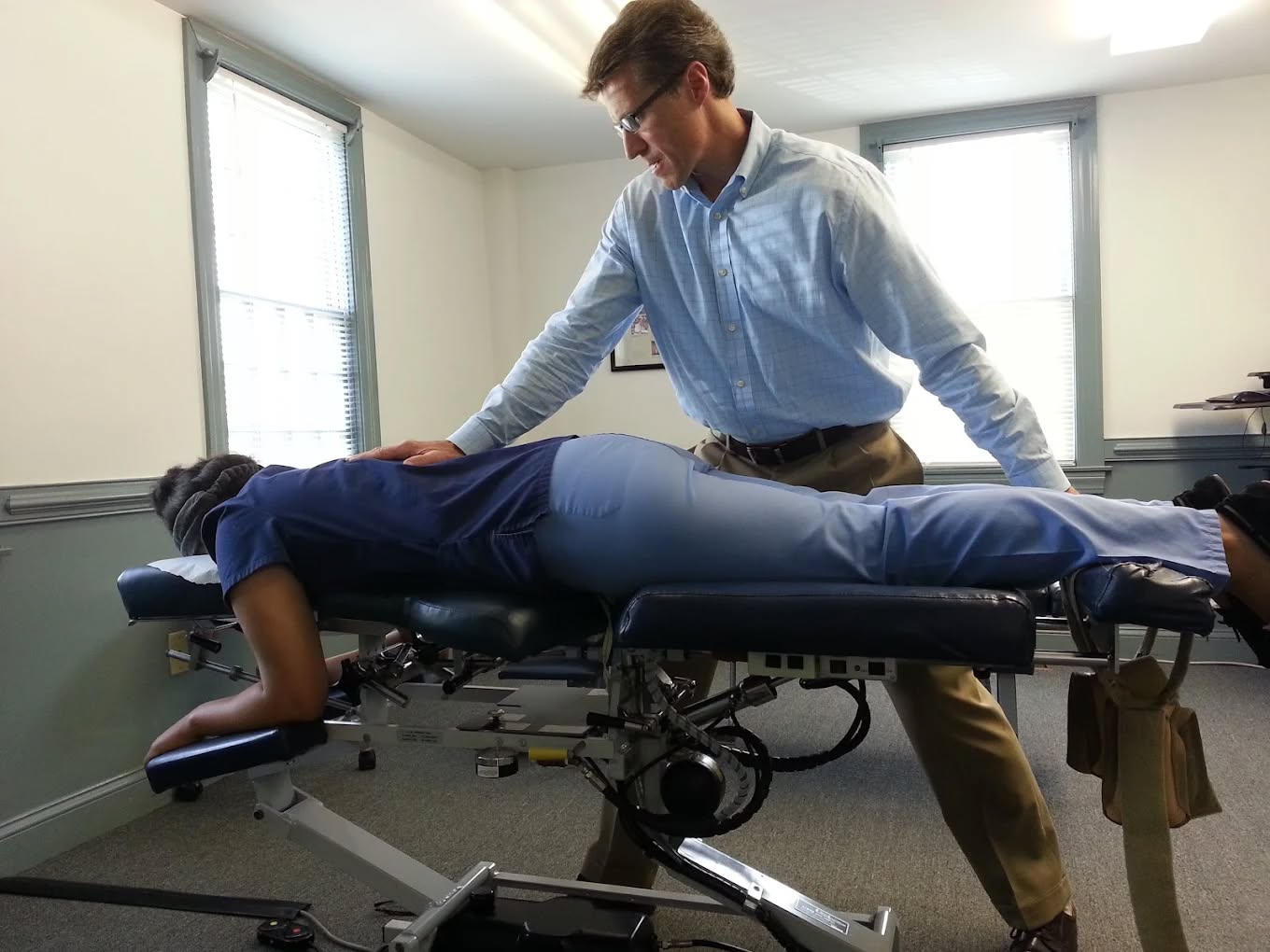
Flexion-distraction is a form of spinal mobilization performed on a specialized treatment table. The table allows controlled movement of the lower back while the provider guides the motion. It starts with decompressing the joints and disc structures in the spine and then adds a gentle stretch through the tissue.
Rather than relying on a quick thrust, flexion-distraction uses slower, repeated movements through a comfortable range of motion.
For some patients, this provides a way to introduce movement to the lower back while using a different type of mechanical input than traditional spinal manipulation.
It is not something every patient needs. Like any treatment, it should be selected based on the individual’s symptoms, examination findings, tolerance, and goals.
What Does the Research Say About Flexion-Distraction?
Flexion-distraction has been studied as part of conservative treatment for several low back conditions.
A 2015 study published in the Journal of Physical Therapy Science examined 30 patients with lumbar spinal stenosis. One group received conservative physical therapy, while the other received the same conservative treatment along with flexion-distraction manipulation. After six weeks, both groups improved, with greater reductions in pain and disability reported in the flexion-distraction group.
There are important limitations to keep in mind. This was a small study, and the patients had lumbar spinal stenosis specifically. The findings should not be interpreted as proof that flexion-distraction is the right treatment for every person with acute low back pain.
That distinction matters when looking at research.
A treatment does not have to be appropriate for everyone to be a useful tool for the right patient.
What Does the Research Say About Spinal Manipulation?
Spinal manipulation has been studied extensively as a treatment for acute low back pain.
A systematic review and meta-analysis published in JAMA evaluated 26 randomized clinical trials involving patients with acute low back pain. The researchers found that spinal manipulation was associated with improvements in pain and function for up to six weeks compared with other treatments.
These findings support spinal manipulation as one effective conservative treatment option for patients with acute low back pain. However, research on a treatment category does not eliminate the importance of the clinical decision-making that happens with an individual patient.
The technique, the amount of force, the area being treated, and the timing of treatment should all be considered based on the patient’s presentation and tolerance.
That’s why having multiple treatment options matters. A patient may respond well to a traditional manipulation, while another may be better suited to mobilization, flexion-distraction, exercise, or a combination of approaches.
The goal is not to use the same technique on every patient. The goal is to determine which approach is most appropriate for the patient in front of us.
What Else Can Help Acute Low Back Pain?
Hands-on treatment is only one part of conservative care.
Depending on your examination, symptoms, and current tolerance, treatment may include:
- Spinal manipulation or mobilization
- Flexion-distraction
- Soft-tissue techniques
- Gentle mobility exercises
- Activity recommendations
- Education about your condition
- Progressive strengthening as symptoms improve
The amount and intensity of each should change as you recover.
Someone in the first few days of an acute injury may need a very different approach than someone who has been dealing with the same problem for several months.
Don’t Do Too Much Too Soon
One of the biggest mistakes during an acute flare-up can be assuming that more is always better.
More stretching, more exercise, more activity, or more treatment does not automatically mean faster recovery.
Instead, the goal is to find the appropriate level of activity and treatment that your body can tolerate and then gradually increase your capacity as you improve.
That might mean starting with a gentle treatment and short walks, then progressing to mobility exercises, strengthening, and eventually your normal workouts as your symptoms allow.
The Goal Is to Get You Moving Again, Even after Acute Low Back Pain
The goal of treating acute low back pain isn’t simply to make the pain disappear for a few hours.
It is to help you return to the activities that matter to you.
That might mean getting through a workday without constantly thinking about your back, sleeping comfortably, picking up your child, returning to the gym, or simply being able to move normally again.
As symptoms improve, treatment can transition from helping you through the acute episode toward restoring strength, mobility, and tolerance for the activities that matter most to you.
There Isn’t One Treatment for Everyone
There is no single treatment that every person with acute low back pain needs.
An examination allows us to determine what may be contributing to your symptoms and select the appropriate tools for your particular presentation.
At Modern Health & Wellness, our approach combines chiropractic care, manual therapy, therapeutic exercise, and rehabilitation when appropriate. The goal is to match the treatment to the patient rather than force every patient into the same treatment.
If acute low back pain is making it difficult to move normally, an evaluation can help determine what may be contributing to your symptoms and what treatment options may be appropriate to help you get moving again.