
Key Takeaways:
- Most people with do not need an MRI for sciatica immediately.
- A thorough history and physical examination often guide the initial treatment plan.
- MRI is more likely to be recommended if symptoms are severe, progressive, or fail to improve with conservative care.
- Seek immediate medical attention if you experience bowel or bladder changes, saddle numbness, or rapidly worsening weakness.
One of the most common questions we hear from patients with leg or back pain is:
“Should I get an MRI for sciatica?”
The answer depends on your symptoms, your medical history, and how long the problem has been present.
What Is Sciatica?
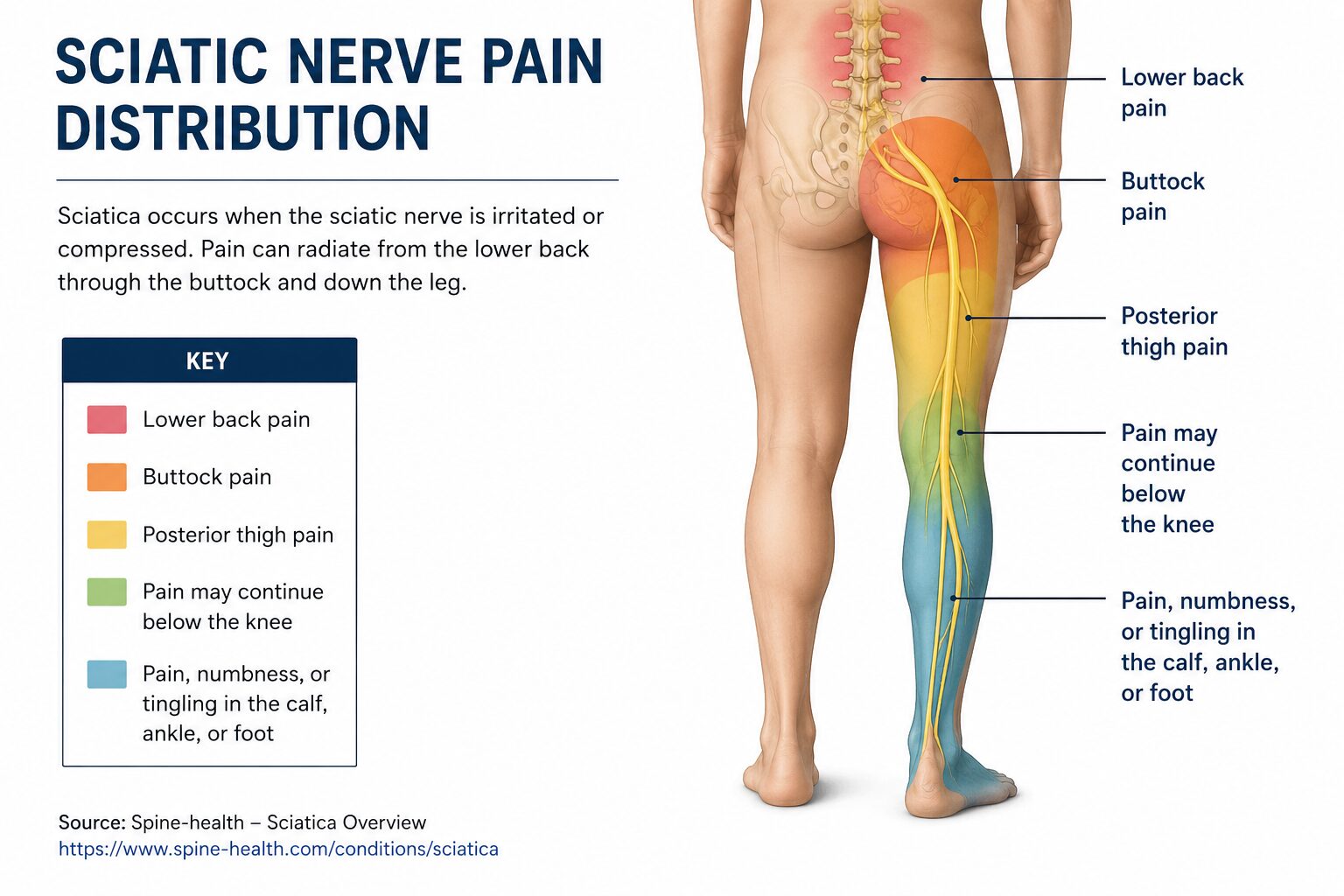
Sciatica is a term used to describe pain, numbness, tingling, or weakness that travels down the leg due to irritation of the sciatic nerve or one of the nerve roots that contribute to it. “Sciatica” is a commonly used word in healthcare, but not all back pain is true “sciatica”. You can read more about the distinction here:
Common causes of Sciatica include:
- Disc herniations
- Disc bulges
- Spinal stenosis
- Degenerative changes
- Inflammation around a nerve root
Symptoms may include:
- Pain radiating into the buttock or leg
- Tingling or numbness
- Burning sensations
- Weakness in the leg or foot
When Is an MRI for Sciatica Necessary?
Many people are surprised to learn that an MRI is not always required during the initial stages of treatment.
Current guidelines generally recommend conservative care first unless certain warning signs or “red flags” are present.
In many cases, symptoms improve with time, activity modification, exercise, and conservative treatment.
Situations That May Warrant Earlier Imaging
Imaging may be considered sooner if symptoms include:
- Significant muscle weakness
- Progressive neurological changes
- Loss of bowel or bladder control
- Severe trauma
- Signs of infection
- History of cancer
- Symptoms that continue to worsen despite treatment
These situations require prompt medical evaluation.
Why Not Order an MRI for Everyone?
MRIs are excellent diagnostic tools, but they also frequently reveal findings that may not be causing symptoms.
Disc bulges and degenerative changes are common, even in people without pain.
For this reason, imaging findings should always be interpreted alongside a patient’s history and physical examination.
What Should You Do If You Think You Have Sciatica?
The first step is obtaining an appropriate evaluation.
A thorough history and physical examination can often determine whether symptoms are consistent with sciatica and whether additional testing may be needed.
If symptoms are improving and no concerning signs are present, conservative care is often the recommended starting point.
If symptoms persist, worsen, or neurological deficits develop, additional imaging and medical evaluation may become appropriate.
Final Thoughts
An MRI can be an important tool when indicated, but it is not always the first step for every patient with sciatica.
The most important factor is matching the right test to the right patient at the right time.
If you are experiencing leg pain, numbness, tingling, or symptoms consistent with sciatica, a comprehensive evaluation can help determine the most appropriate next steps.
Frequently Asked Questions
Can an X-ray diagnose sciatica?
No. X-rays are useful for evaluating bones, alignment, fractures, and certain degenerative changes, but they do not show nerves or spinal discs. Sciatica is often caused by irritation or compression of a nerve, which typically cannot be seen on a standard X-ray. However, an x-ray is typically done first to rule out other pathologic causes, and to justify an MRI in the future, as needed.
How long should I wait before getting an MRI for sciatica?
Every case is different, but many people with new-onset sciatica improve within several weeks with conservative treatment. If symptoms are severe, worsening, associated with significant weakness, or fail to improve as expected, your healthcare provider may recommend an MRI more quickly to better understand the underlying cause.
What are the warning signs that require immediate medical attention?
Seek immediate medical evaluation if you experience:
- Loss of bowel or bladder control
- Numbness in the groin or saddle region
- Rapidly worsening leg weakness
- Severe pain following significant trauma
- Fever, unexplained weight loss, or other signs of infection along with back pain
These symptoms may indicate a more serious condition requiring urgent evaluation.
Can sciatica go away without surgery?
Yes. Most cases of sciatica improve without surgery. Conservative treatments such as maintaining appropriate activity, exercise, physical therapy, chiropractic care when appropriate, and time often lead to significant improvement. Surgery is generally reserved for specific situations, such as persistent symptoms, progressive neurological deficits, or conditions that do not respond to conservative management.
What causes sciatica?
Sciatica is a symptom rather than a diagnosis. It occurs when the sciatic nerve or one of the nerve roots in the lower back becomes irritated or compressed. Common causes include disc herniations, spinal stenosis, degenerative changes, and, less commonly, other medical conditions affecting the spine or surrounding tissues.
Should I rest or stay active if I have sciatica?
For most people, prolonged bed rest is not recommended. Gentle movement and gradually returning to normal activities, as tolerated, are generally associated with better outcomes than complete inactivity. Your healthcare provider can recommend an activity plan based on your specific condition.
When should I see a healthcare provider for sciatica?
If your symptoms last more than a few days, interfere with daily activities, continue to worsen, or are accompanied by weakness or numbness, it is important to have a comprehensive evaluation. An accurate diagnosis can help determine the most appropriate treatment plan and whether additional testing is needed.