
Low back pain is one of the most common health complaints worldwide and a leading cause of disability. Nearly everyone will experience back pain at some point in their lives, making it one of the most frequently treated musculoskeletal conditions in healthcare.
A recent review published in the Journal of the American Medical Association (JAMA) examined the causes, evaluation, and treatment of nonspecific low back pain and reinforced the importance of conservative, evidence-based care.
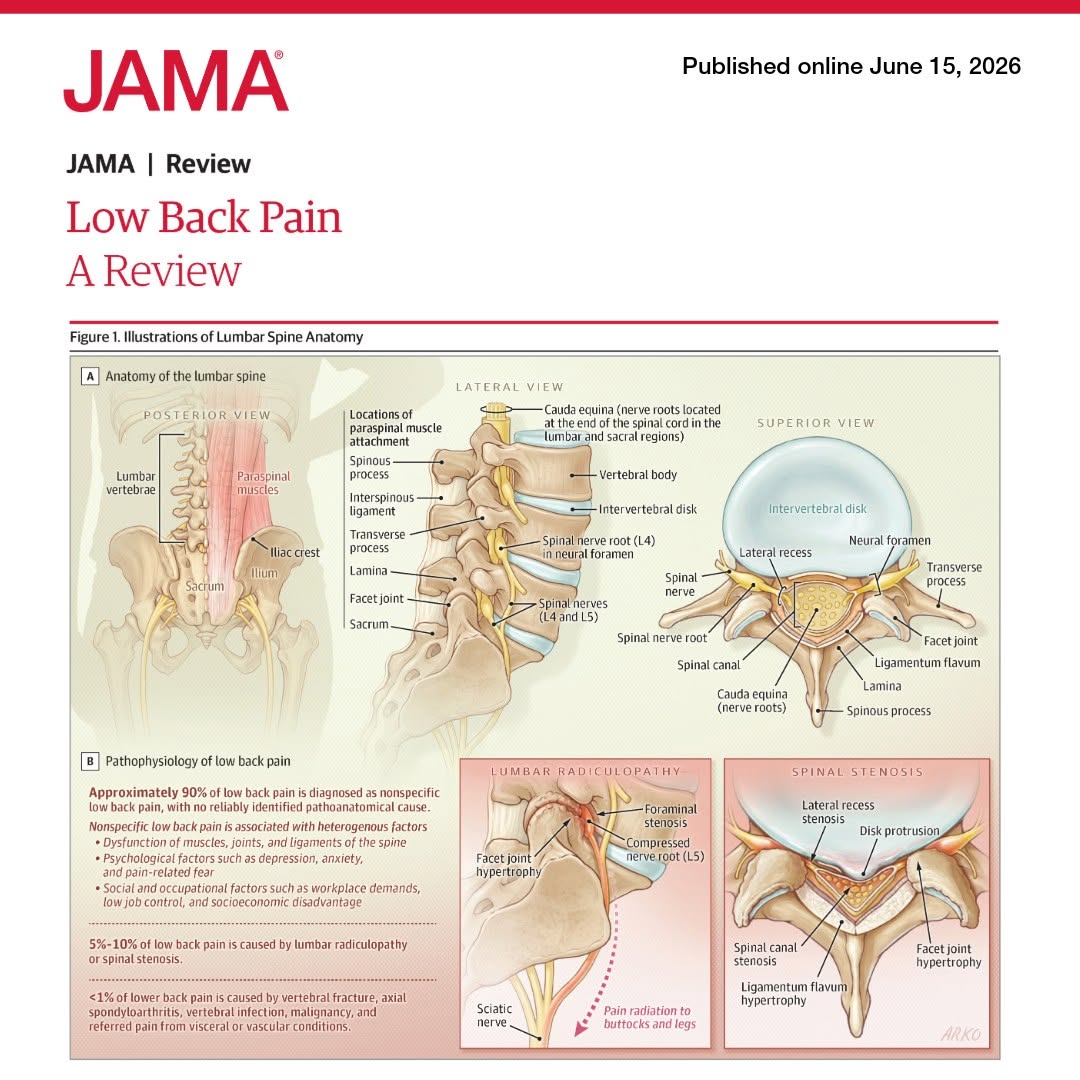
Low Back Pain Has No Single Identifiable Cause?
According to the review, approximately 90% of low back pain cases seen in clinical practice are classified as “nonspecific low back pain.” This means there is no single identifiable structure responsible for all the symptoms. However, one can get a good sense of what we call a “pain generating tissue” with a thorough examination. Read more here:
While this can sometimes be frustrating for patients seeking answers, it also means that many episodes of low back pain respond well to conservative treatment approaches focused on improving function, movement, and overall quality of life.
First-Line Treatment Often Does Not Involve Medication
One of the most notable findings from the review is that initial treatment recommendations emphasize education, remaining active, and conservative therapies.
For acute low back pain, first-line treatment options may include:
- Heat or cold therapy
- Spinal manipulation
- Massage therapy
- Acupuncture
- Activity modification and exercise
These approaches are often recommended before more aggressive interventions and can help patients return to normal activities more quickly.
The Importance of Staying Active for Low Back Pain
Years ago, patients with back pain were often advised to rest in bed. Today, research suggests that prolonged inactivity may actually slow recovery.
Current recommendations encourage patients to remain as active as possible while avoiding activities that significantly worsen symptoms.
Movement helps maintain flexibility, strength, and confidence while reducing the fear that often accompanies painful episodes.
Where Does Spinal Manipulation Fit In?
The JAMA review specifically identifies spinal manipulation as one of several recommended nonpharmacological treatment options for acute low back pain. And remember, there are a LOT of spinal manipulation techniques available for all patients.
Spinal manipulation is commonly used by chiropractors and other healthcare professionals to help improve joint mobility, reduce pain, and restore normal movement patterns.
While no single treatment works for every patient, spinal manipulation can be an effective part of a comprehensive treatment plan that may also include stretching, exercise, soft tissue therapy, and education.
A Team Approach to Recovery
At Modern Health & Wellness, we believe successful recovery involves more than simply reducing symptoms.
Our goal is to help patients:
- Reduce pain
- Improve mobility
- Return to daily activities
- Build strength and resilience
- Prevent future episodes whenever possible
Treatment plans may include chiropractic care, therapeutic exercise, mobility work, soft tissue techniques, and personalized recommendations based on each patient’s goals.
The Bottom Line
Low back pain remains one of the most common reasons people seek healthcare. The good news is that many cases respond well to conservative treatment approaches.
The recent JAMA review reinforces what many patients have experienced firsthand: staying active, understanding your condition, and utilizing evidence-based conservative therapies can play an important role in recovery.
If you’re experiencing low back pain and would like to learn more about your treatment options, contact Modern Health & Wellness to schedule an evaluation.