
You wouldn’t build a house by randomly putting up walls and hoping it turns into something useful. You start with a blueprint. Strength training is the blueprint for our future freedom.
The blueprint tells you what you’re building, what it needs to do, and how the individual pieces fit together to create the finished product.
Your health and fitness should work the same way. Personalized strength training is how we approach this for ourselves and our patients
What Are You Actually Training For?
For many people, exercise becomes a collection of disconnected goals:
Lose 10 pounds.
Build bigger arms.
Improve your blood pressure.
Get stronger.
Eat healthier.
Those are all worthwhile goals, but they’re not the finished product.
The bigger question is:
What do you want your body to allow you to do for the rest of your life?
For us, one of those answers is travel.
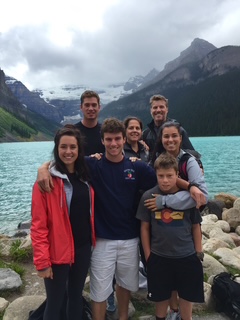
We’re heading to Ireland soon for a family trip, and being able to travel, explore, walk, carry our luggage, climb stairs, and experience a new place comfortably is exactly the kind of thing we want to continue doing as we get older.
That changes how we think about training.
Strength Training for “Real Life”
If your goal is to stay active as you age, your training should prepare you for the physical demands of the life you want to live.
For example, traveling requires much more than being able to lift a barbell in the gym.
You may need to:
- Lift a suitcase into an overhead airplane compartment
- Carry bags through an airport
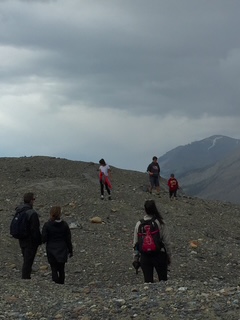
- Walk several miles while sightseeing
- Climb stairs repeatedly
- Walk up hills and uneven terrain
- Stand for extended periods
- Get up and down from the ground
- Carry groceries or luggage after a long day of travel
Those are all physical skills.
And they can all be trained.
The Gym Is the Practice Field
This doesn’t mean you need to recreate an airport or the Cliffs of Moher in your gym.
It means you can use the gym to build the physical qualities that make those activities easier.
A shoulder press can help develop the strength required to put a bag into an airplane’s overhead compartment.
Walking and loaded carries can build the strength and endurance needed to move through an airport with luggage.
Squats, step-ups, and lunges can prepare you for stairs and uneven terrain.
Resistance training can help preserve the muscle and strength that make everyday activities easier as you age.
Cardiovascular training can build the endurance required for a long day of walking and exploring.
The individual exercises aren’t the destination.
They’re the building materials.
Nutrition Is Part of the Blueprint Too
The same concept applies to eating.
A diet shouldn’t just be designed around what you want the scale to say next month.
It should support the body you want to have years from now.
That may mean eating enough protein to support muscle, getting enough fiber and micronutrients, maintaining a healthy body composition, and developing eating habits you can actually sustain.
There’s no single perfect diet.
The best approach is one that supports your health while still allowing you to enjoy your life.
Because the goal isn’t to spend your entire life preparing to live.
The goal is to be healthy enough to live it.
Don’t Confuse the Blueprint With the Building
This is where people can get stuck.
They become so focused on individual numbers that they lose sight of what those numbers are supposed to accomplish.
Your body weight is a number.
Your calories are a tool.
Your protein intake is a tool.
Your workout program is a tool.
Your steps are a tool.
Your cardiovascular fitness is a tool.
None of these are the final objective.
The objective is what all of those things allow you to do.
Maybe that’s traveling internationally at 70.
Maybe it’s playing with your grandchildren.
Maybe it’s hiking.
Maybe it’s continuing to play recreational sports.
Maybe it’s simply getting out of a chair, carrying your own groceries, and living independently.
Your blueprint should reflect that.
Build the Body for the Life You Want
A good strength training program doesn’t just ask:
“What muscles should we work today?”
It asks:
“What do I want to be able to do 10, 20, or 30 years from now?”
Then you work backward.
Want to travel comfortably as you get older?
Build strength.
Want to hike?
Train your legs and cardiovascular system.
Want to carry your own luggage?
Train your upper body and grip.
Want to stay independent?
Preserve muscle, strength, balance, mobility, and cardiovascular fitness.
Want to enjoy those things without constantly worrying about your body?
Take care of it now. This is the framework of our fitness philosophy:
Our Ireland Trip Is Part of the Plan
Our upcoming family trip to Ireland is actually a great example of why we train.
We aren’t strength training so that we can spend our lives in the gym.
We’re training so that the gym helps us live the life we want outside of it.
We’ll be carrying luggage through airports, walking long distances, climbing stairs, navigating uneven terrain, and exploring somewhere we’ve never been.
And that’s exactly what we want our bodies to be capable of doing as we get older.
The workout is not the goal. The life that the workout helps you live is the goal.
That’s the blueprint.
And when you know what you’re building, your training, nutrition, recovery, and health decisions start to make a lot more sense.
For a new patient or personal strength training consultation, click the LINK here: